


IT’s important to know which half of your Advertising budget is wasted?
The Story goes that Lord Leverhulme, founder of the Lever FMCG Empire, once remarked; “Half my advertising budget is wasted. Problem is, I don’t know which half”.
This raises an important question. How do you fix your advertising budget? Too often in the Gulf, methods are arbitrary. Example; take 2% of your annual turnover and award that to your advertising-communications annual spend. Would that work?
The good news: there is a repertoire of measures your company can use to minimize your ad budget; optimize its effect while achieving your objectives.
WHEN DID YOU LAST CARRY OUT A BRAND COMMUNICATIONS & BUDGETS AUDIT?
We’re considering launching a flexible system for this, it will be called: “BrainAudit”. Here’s how Stage 1 works.
Take a random sample from your existing customers and target, potential customers.
- Via strategic telemarketing and follow-ups identify the key attitudes customers and potential customers have towards your brand.
- Refine your telemarketing with Brand Attribute Analysis grids that ‘position’ your brand’s main characteristics against those of nearest competitors.
- And, how many extra customers did you capture in the last trading year?
- What was the rough cost of each new customer against your total ad-communications budget for that year?
- Once you can compare year by year, what is the trend?
BRAND LEADERS AND THE VIRTUOUS CIRCLE.
Brand leaders often spend more on their advertising than rival brands. Are they wasting money?
- Research shows the brand leader gets better value on his ad spend Vs his sales revenue.
- This is an enviable virtuous circle. The brand leader outspends the competition – gets more for his money.
In your further Brand Audit research were there any significant shifts in brand perceptions? Example: a short Brand Audit in Saudi confirmed that a dominant brand leader’s advertising was doing very little to ‘warm up’ his brand. It wasn’t particularly liked.
The foregoing is a quick overview. Meticulous planning is essential.
DO YOU HAVE TOO NARROW A CONCEPT OF YOUR BRAND?
Your “brand” is everything from the smile on your salesman’s face to the dirt on your delivery van.
Therefore, your Brand Audit should review every significant interface between your customer and your product range, your salesmen, your retail environment, packaging and after sales.
Research into consumer attitudes and brands reveals, everything your customer has ever experienced in contact with any aspect of your brand, your company, packaging and environment – all shape and modify his/her brand attitude.
HOW EFFECTIVE IS YOUR PRINT ADVERTISNG AND COLLATERALS?
In mature markets research exists to reliably test and pre-test press ads, print collaterals and direct mail packages. Data charts allow you to calculate the statistical reliability of your test.
Let’s look at a quick example.
In your direct mail package you test two different letter themes and the headline on your brochure.
You use a factorial grid to render results statistically more reliable and you mail 10,000 people.
- Your tracking data reveals a statistical variation of +/- 0.3%
- Your test results for letter A = 3.2%. Letter B = 3.3%
- Statistically, these two results are the same.
- To achieve a useful result you would have to mail a greater quantity.
Sounds complicated but it isn’t.
Imagine: using test methods like these, over time, your company could test the headline, the main pictures, the offer, until you had the “Optimum Response Package”.
Wastage? Gradually eliminated. Cost per sale? Reduce steadily.
HOW WELL DO YOU UNDERSTAND CONSUMER ATTITUDES TO YOUR BRAND?
Perhaps the biggest mistake companies, ad agencies; media shops make in the Gulf is to substitute facts and figures for Consumer Behaviour Profiling.
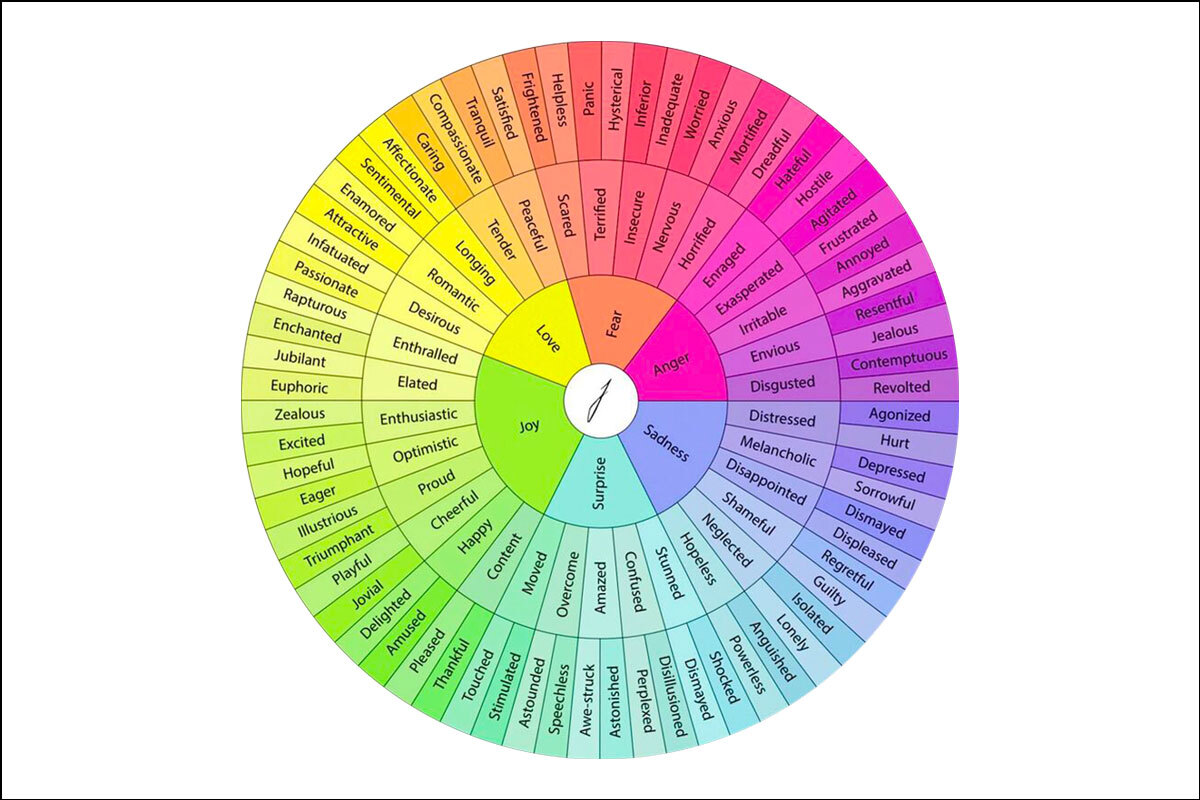
Creative Leaders should understand the concept of consumer behaviour (for more information on understanding consumer behaviour visit http://www.islamaltaher.com/book/). Objective? Define the emotional and behavioural responses of target consumers for a given brand.
We call it – “Sherlock Holmes meets Sigmund Freud”. Brilliant detective work blended with psychoanalysis. Is this necessary? Absolutely. Let us quickly, explain why.
Forgive us if we delve into the realms of science.
There is a formula your company can use to better define your target consumers’ attitudes towards your brand.
AFFECT + COGNITION = CONSUMER’S BRAND ATTITUDE (Modified by Time & Environment)
- “AFFECT” defines the key emotional responses your target consumer holds towards your brand. Emotions are connected to his/her behaviour and they evolve over time.
- “Cognition” is the more reasoned response the consumer has towards your brand.
- Affect dominates Cognition.
- The consumer cannot block his Affect responses.
- Both, together, add up to his BRAND ATTITUDE.
Quick example: “I love the body shape and styling of the new Maserati (Affect) – but, there’s no way I can afford to buy or service one” (Cognition).
Use this broad formula in your Brand Audit to pinpoint Affect, Cognition and Attitude. Why? I hear your dulcet cry. Now, you can fine-tune all your advertising tools to push the right Affect and Cognition buttons.
IS YOUR ADSPEND THIS YEAR WAY OVER THE TOP, OR TOO LITTLE?
Unsurprisingly, some ad agencies often urge you to “spend more”
“We can’t achieve the objectives with your budget!”
“Who’s objectives is he referring to? Yours or his own?”
There is a better way of evaluating media than the existing GRPs and other data aggregating we currently use in the Gulf.
The bad news. Media data/profiling and readership are not niche slanted as in more mature markets.
Once your Brand Audit has identified and prioritized which niches you want to hit you then need to know at what cost per 1,000 individual media deliver s each niche. Example: how many new car buyers can you buy for SR1,000 in any given newspaper or magazine?
We apologize if this article raises more questions than answers.
But it does highlight the need for us all to work together to bring in methods that allow advertisers at every level of spend to MEASURE the effects of their ad –communications campaigns.
Of course, long ago the legendary Lord Leverhulme helped to pioneer great FMCG brands. That led to ever more efficient systems to measure advertising spend. Which helped to create world-class brands. And, with the science to direct your brand, so can you.
IT’s important.. No?

Brand Building lessons from top 3 Religions.
1. Brand loyalty can be extreme2. High sense of belonging is achievable3. Recognizable Brand style (hair cut, beard, outfit, accessories) worn proudly by Brand Enthusiasts, despite
Brand Relationship!
Your company must have a lively soul inside its corporate body. Think and act from a human POV, not only business. The fact that most of businesses in the Arab World are being eval